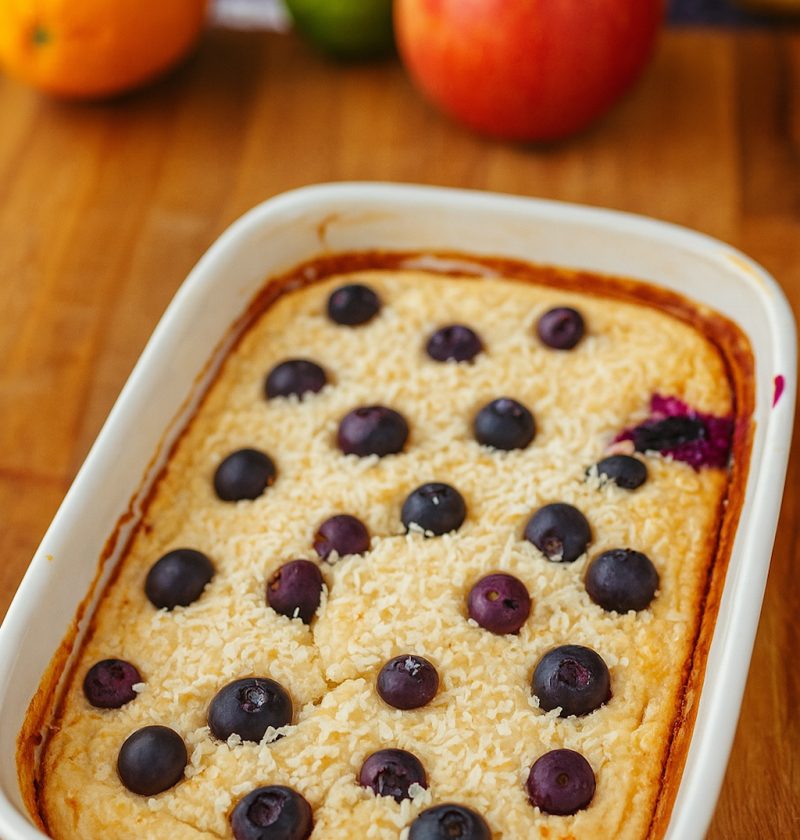
A wholesome, soft and comforting oatmeal cake made with yogurt, eggs, rolled oats, blueberries and a touch of honey. It is naturally sweet, flourless, butter-free and perfect for breakfast, brunch, a healthy snack or a light dessert.
This is the kind of recipe I love recommending to beginners because it is simple, forgiving and still feels special. You do not need a mixer, advanced baking skills or complicated equipment. Everything is mixed directly in the baking dish, then baked until the top is golden and the inside turns tender, creamy and cake-like.
The secret is in the balance: yogurt keeps the cake moist, eggs give structure, oats add body, blueberries bring freshness, and coconut flakes create a lightly toasted finish. With just a few small chef’s tricks, this simple oat bake tastes like something from a cosy café.
Detailed Step-by-Step Instructions
Step 1: Preheat the oven properly
Preheat your oven to 180°C, using the middle rack.
Do not skip this step. A properly preheated oven helps the eggs set evenly and gives the top a gentle golden colour. If you put the cake into a cold oven, the batter may stay heavy and the oats can become soggy before the structure sets.
Chef’s secret:
For small oat cakes like this, steady heat is more important than high heat. 180°C gives the yogurt and eggs time to firm up without drying the edges.
Step 2: Choose the right baking dish
Use a small ceramic, glass or metal oven-safe dish. The batter should fill the dish about halfway to two-thirds full.
If the dish is too large, the cake will bake too thin and may dry out. If the dish is too small, the centre may stay wet while the top browns too quickly.
Lightly grease the dish with a little neutral oil, butter or cooking spray. You can also line it with baking paper if you want neat slices.
Beginner tip:
A ceramic dish gives a softer, more pudding-like texture. A metal dish gives slightly firmer edges.
Step 3: Add the yogurt
Place 250 g plain yogurt directly into the baking dish.
Greek yogurt will make the cake creamier and richer. Regular plain yogurt will make it lighter and softer. Both work well, but avoid very runny yogurt if possible.
Chef’s secret:
Room-temperature yogurt blends more smoothly with eggs. If your yogurt is very cold, let it sit on the counter for 10 minutes before using.
Step 4: Add the eggs
Crack in 2 large eggs.
Use a fork to gently beat the eggs into the yogurt until the mixture looks smooth and creamy. You do not need to whisk aggressively. Just mix until the yellow streaks disappear.
Why this matters:
Eggs are what hold this cake together. If they are not mixed properly, you may get small eggy patches after baking.
Step 5: Sweeten the mixture
Add 30 g honey or agave syrup.
Stir again until the sweetener is fully combined. Honey gives a warmer, deeper flavour. Agave syrup tastes cleaner and lighter.
Chef’s tip:
Do not over-sweeten the batter at this stage. Blueberries become sweeter as they bake, and coconut also adds natural sweetness.
Step 6: Add vanilla and salt
Add 1 tsp vanilla extract and a small pinch of salt.
The salt will not make the cake salty. It simply makes the honey, vanilla and blueberries taste brighter.
Professional secret:
Most beginner bakers forget salt in sweet recipes. A tiny pinch can make a simple oat cake taste much more complete.
Step 7: Stir in the oats
Add 40 g rolled oats and mix gently.
Make sure all oats are covered with the yogurt mixture. Do not rush this part. Dry oats on the surface may bake hard instead of becoming tender.
Important:
Use rolled oats, not instant oats. Rolled oats give a better texture. Instant oats can turn the cake mushy and heavy.
Step 8: Let the mixture rest
Let the batter sit for 5 minutes before baking.
This short rest allows the oats to absorb some moisture. The final texture will be softer, more tender and less grainy.
Chef’s secret:
This is one of the easiest ways to improve any oat-based bake. Even 5 minutes makes a difference.
Step 9: Add baking powder if using
If you want a lighter, more cake-like texture, stir in ½ tsp baking powder after the oats have rested.
Mix gently, just until combined.
Why add it now?
Baking powder starts reacting once it touches moisture. Adding it close to baking gives you a better rise.
Step 10: Add the blueberries
Scatter 60–80 g blueberries over the top.
Press a few berries gently into the batter, but leave some on the surface. This gives you juicy berries inside and a beautiful top after baking.
Fresh blueberries work beautifully. Frozen blueberries also work, but use them straight from the freezer. Do not thaw them first, or they may release too much liquid and turn the batter purple.
Chef’s secret:
If your blueberries are very large, cut a few in half. This helps distribute the fruit more evenly through the cake.
Step 11: Add coconut flakes
Sprinkle 8–10 g coconut flakes over the top.
Coconut adds texture and aroma. As it bakes, it becomes lightly toasted and gives the cake a more finished, bakery-style look.
Important tip:
Do not cover the entire top too thickly with coconut. A light layer is enough. Too much coconut can brown too fast.
Step 12: Bake gently
Place the dish on the middle rack and bake for 25–30 minutes at 180°C.
The cake is ready when:
- the top looks lightly golden,
- the edges are set,
- the centre no longer looks liquid,
- the cake springs back slightly when touched,
- a skewer inserted in the centre comes out mostly clean, with a few moist crumbs.
Do not overbake it. This cake should stay soft and moist inside.
Chef’s secret:
If the coconut browns too quickly, loosely cover the dish with foil for the last 5–8 minutes.
Step 13: Rest before serving
Remove the dish from the oven and let the cake rest for 5–10 minutes.
This resting time is important. Straight from the oven, the cake will be very soft. After a few minutes, the oats continue absorbing moisture and the texture becomes easier to slice or spoon.
Beginner tip:
Do not judge the texture immediately after baking. Oat cakes always firm up slightly as they cool.
Step 14: Serve warm
Serve warm with a spoonful of Greek yogurt, extra blueberries or a light drizzle of honey.
For a breakfast version, keep it simple with yogurt and fruit. For a dessert version, add dark chocolate shavings, toasted nuts or a small scoop of vanilla ice cream.
Storage Instructions
Let the cake cool completely before storing.
Place leftovers in an airtight container and refrigerate for up to 3 days.
To reheat, microwave one portion for 20–30 seconds, or warm it in the oven at 160°C for 8–10 minutes.
Freezing is not ideal because yogurt-based oat cakes can become slightly watery after thawing. It is best enjoyed fresh or refrigerated.
Nutrition Per Serving
Approximate values based on 2 generous servings.
- Calories: 320 kcal
- Protein: 15 g
- Carbohydrates: 38 g
- Fat: 14 g
- Fibre: 4 g
- Sugars: 19 g
- Sodium: 150 mg
Nutrition may vary depending on the yogurt, honey, agave syrup and toppings used.
Chef’s Best Tips
- Use thick yogurt for the best texture. Greek yogurt gives the cake a creamy, rich centre.
- Let the oats rest before baking. Five minutes is enough to make the cake softer.
- Do not use instant oats. They absorb liquid too quickly and can make the cake mushy.
- Use frozen blueberries straight from the freezer. Thawing releases too much juice.
- Add a pinch of salt. It improves the flavour more than you might expect.
- Do not overbake. The cake should be moist, not dry.
- Add lemon zest for freshness. It makes the blueberries taste brighter.
- Toast the coconut lightly for deeper flavour. You can toast it before adding or let it brown in the oven.
- Use a small dish. A large dish makes the cake too thin.
- Rest before slicing. The texture improves after 5–10 minutes.
Variations
Apple Cinnamon Oatmeal Cake
Replace blueberries with finely diced apple. Add ½ tsp cinnamon and a few chopped walnuts.
Chocolate Banana Version
Add ½ sliced banana and 10 g dark chocolate chips before baking.
Lemon Blueberry Version
Add ½ tsp lemon zest and use Greek yogurt for a brighter, fresher flavour.
Nutty Breakfast Version
Top with chopped almonds, walnuts or pecans before baking.
High-Protein Version
Use high-protein Greek yogurt and add 1 tbsp chia seeds.
FAQ
Can I make this oatmeal cake without eggs?
Yes, but the texture will be softer and less cake-like. You can replace each egg with 1 tbsp ground flaxseed mixed with 3 tbsp water. Let the mixture sit for 10 minutes before using.
Can I use instant oats?
I do not recommend it. Instant oats make the texture softer and sometimes gummy. Rolled oats give a better bite and structure.
Can I use frozen blueberries?
Yes. Add them straight from the freezer. Do not thaw them first.
Can I make this recipe dairy-free?
Yes. Use a thick dairy-free yogurt, such as coconut yogurt or soy yogurt. Choose one that is not too runny.
Is this recipe gluten-free?
It can be gluten-free if you use certified gluten-free oats.
Can I double the recipe?
Yes. Double all ingredients and use a larger baking dish, around 20 × 20 cm. Bake for about 35–40 minutes, checking the centre before removing it from the oven.
Why is my oat cake too wet?
It may need a few more minutes in the oven, or the yogurt may have been too runny. Letting the batter rest before baking also helps.
Why is my cake dry?
It was probably overbaked or baked in a dish that was too large. Use a smaller dish and remove the cake when the centre is just set.
Can I prepare it the night before?
Yes. Bake it, cool it, cover it and refrigerate. Reheat gently the next morning.
What should I serve with it?
It is excellent with Greek yogurt, fresh berries, honey, almond butter, chopped nuts or a cup of coffee.
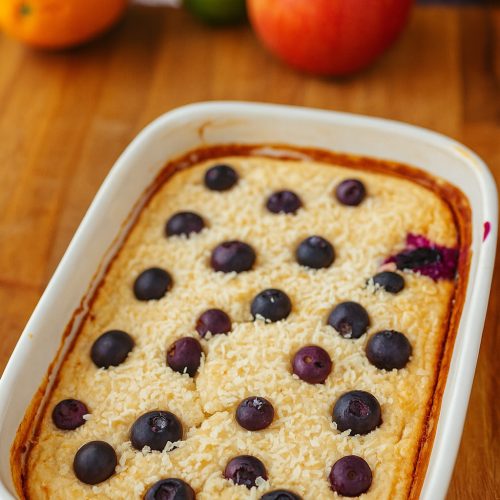
Blueberry Dream Oatmeal Cake
Instructions
- Preheat the oven to 180°C.
- Lightly grease a small oven-safe baking dish.
- Add yogurt, eggs, honey, vanilla and salt to the dish. Mix until smooth.
- Stir in the rolled oats and let the mixture rest for 5 minutes.
- Add baking powder if using and mix gently.
- Scatter blueberries and coconut flakes over the top.
- Bake for 25–30 minutes, until golden and set in the centre.
- Let the cake rest for 5–10 minutes before serving.
- Serve warm with yogurt, berries or a drizzle of honey.