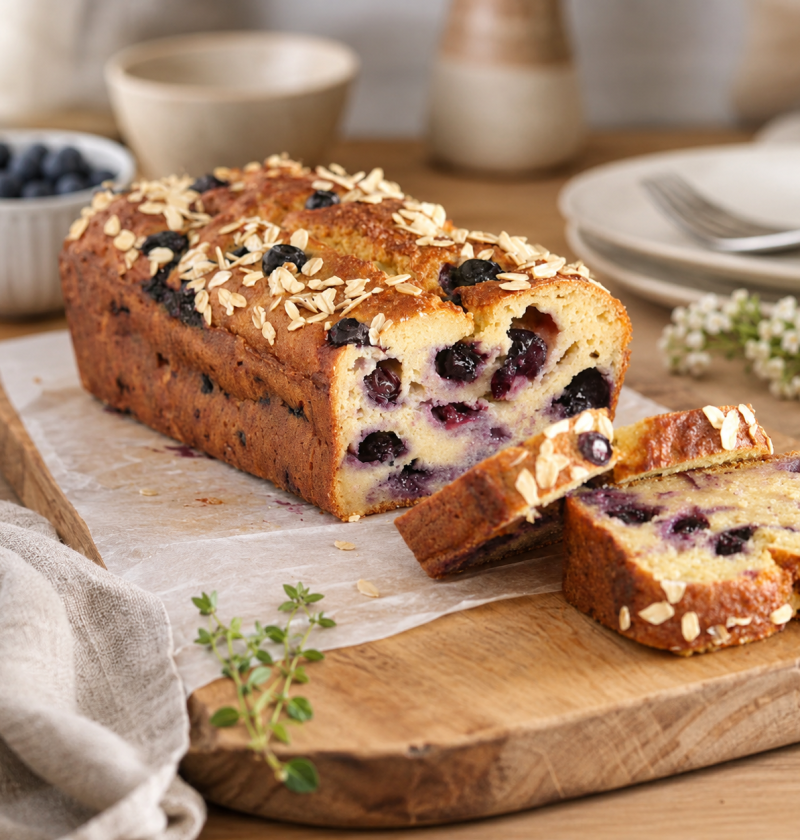
This high-protein Greek yogurt blueberry breakfast bread is wonderfully moist, pleasantly fluffy, and surprisingly easy to prepare. It is made without traditional flour or refined sugar. Finely ground oats replace regular flour, while honey adds a gentle natural sweetness.
Greek yogurt, eggs, and oats provide a substantial amount of protein. Fresh lemon zest adds a bright, refreshing flavor that pairs beautifully with the juicy blueberries.
This bread is ideal for meal-prep breakfasts, afternoon snacks, lunchboxes, or a light sweet treat with coffee. It stays moist for several days and can also be frozen in individual slices.
Important: To make this recipe fully gluten-free, use oats that are specifically certified gluten-free.
Recipe Overview
Prep time: 20 minutes
Baking time: 40–43 minutes
Total time: About 1 hour 2 minutes
Cooling time: At least 1 hour
Category: Breakfast, Bread, Snack
Cuisine: American
Yield: 1 loaf
Suggested servings: Approximately 10 slices
Baking pan: 1 kg or 2 lb loaf pan
Oven temperature: 180°C, conventional top and bottom heat
Detailed Step-by-Step Instructions
1. Prepare the Oven and Loaf Pan
Preheat the oven to 180°C using conventional top and bottom heat.
Avoid using the fan setting if possible. A fan oven can dry out the outside of the bread before the center has finished baking.
Lightly grease the inside of the loaf pan. Line it with parchment paper, leaving some paper hanging over the two longer sides.
The overhanging parchment paper will act as handles, making it much easier to lift the cooled loaf out of the pan.
Chef’s secret:
Greasing the pan before adding the parchment paper helps the paper stick in place. It will not slide around when you pour in the batter.
2. Combine the Wet Ingredients
Crack the eggs into a large mixing bowl and whisk them briefly until the yolks and whites are combined.
Add the Greek yogurt, honey, vanilla extract, and finely grated lemon zest.
Whisk everything together until the mixture looks smooth and uniform. There should be no large lumps of yogurt remaining.
You do not need to whip the eggs until airy or foamy. The goal is simply to combine all the ingredients evenly.
Important for beginners:
Only grate the yellow outer layer of the lemon peel. Avoid the white layer underneath because it has a bitter taste.
Wash and dry the lemon thoroughly before zesting it.
3. Grind the Oats into Oat Flour
Place the oats in a high-speed blender or food processor.
Blend until the oats become a fine, flour-like powder. Stop the machine once or twice and shake the container carefully so that the oats near the sides are processed evenly.
Measure out approximately 1½ tablespoons of the oat flour and set it aside. You will use it later to coat the blueberries.
Chef’s tip:
Quick oats are easier to process into a fine powder than thick old-fashioned rolled oats. The finer the oat flour, the softer and more uniform the finished texture will be.
Do not worry if your homemade oat flour is not as fine as commercial flour. The recipe will still work, but the bread may have a slightly more rustic texture.
4. Add the Oat Flour to the Wet Mixture
Add the remaining oat flour to the yogurt and egg mixture in two or three additions.
Stir thoroughly after each addition. Adding the oat flour gradually helps prevent lumps and makes the batter easier to mix.
Scrape around the sides and bottom of the bowl to make sure there are no hidden pockets of dry oat flour.
The finished batter should be thick but still spoonable. It will be noticeably thicker than a traditional cake batter.
Do not add extra liquid too quickly.
The consistency of Greek yogurt can vary between brands. A thick batter is normal and helps prevent the blueberries from sinking.
5. Add the Baking Powder
Place the baking powder in a fine sieve and sift it directly over the batter.
Stir gently but thoroughly until it is evenly incorporated.
Sifting the baking powder prevents small clumps from remaining in the mixture. These clumps can create unpleasant, bitter-tasting spots in the finished bread.
Do not overmix the batter. Stop as soon as the baking powder is evenly distributed.
Chef’s secret:
Once the baking powder has been added, do not leave the batter standing for a long time. Prepare the blueberries, fill the pan, and bake the loaf promptly.
6. Prepare the Blueberries
Place the blueberries in a small bowl.
Frozen blueberries do not need to be thawed. In fact, it is better to use them directly from the freezer.
Add 1 teaspoon of coconut oil or neutral vegetable oil. Toss the blueberries very gently until they are lightly coated.
Sprinkle the reserved oat flour over the berries and toss again until they are covered with a thin layer.
Why this step matters:
The oil helps the oat flour stick to the surface of the berries. The oat flour absorbs some of the blueberry juice and reduces the chance of the fruit sinking to the bottom of the loaf.
When using frozen blueberries:
Do not thaw them first. Thawed berries release a large amount of liquid and may turn the entire batter grey or purple.
7. Fold the Blueberries into the Batter
Add the coated blueberries to the batter.
Using a silicone spatula, gently fold them in.
Move the spatula down the side of the bowl, scoop the batter from the bottom, and lift it over the berries. Rotate the bowl slightly after every fold.
Continue until the blueberries are evenly distributed.
Avoid stirring aggressively. Vigorous mixing can crush the berries and make the bread wet, streaky, and dense.
8. Transfer the Batter to the Pan
Spoon the batter into the prepared loaf pan.
Spread it evenly into the corners and smooth the surface with a spatula.
Carefully tap the pan once or twice against the work surface to release any large air pockets.
Lightly grease a knife and make a shallow cut lengthwise down the center of the batter. The cut should be approximately 0.5–1 cm deep.
Why cut the top of the batter?
The line creates a controlled weak point, allowing the loaf to rise and split more evenly during baking. This produces a more attractive shape and prevents random cracks.
Decorate the top with a few additional blueberries and a light sprinkle of rolled oats, if desired.
Press the extra blueberries very gently into the surface so that they remain in place during baking.
9. Bake the Breakfast Bread
Place the loaf pan on the middle rack of the preheated oven.
Bake at 180°C using conventional top and bottom heat for 40–43 minutes.
Do not open the oven door during the first 30 minutes. A sudden loss of heat may cause the center of the loaf to collapse.
Begin checking the bread after approximately 38 minutes.
Insert a wooden skewer or toothpick into the center of the loaf. The bread is ready when the skewer comes out without wet batter.
A few moist crumbs are perfectly acceptable. This loaf naturally remains moist because of the Greek yogurt and blueberries.
If the top becomes too dark before the center is fully baked, loosely cover the loaf with parchment paper or aluminum foil. Continue baking until the center is set.
For greater accuracy:
If you have a kitchen thermometer, the internal temperature in the center should be approximately 94–96°C.
10. Cool the Bread Completely
Remove the loaf pan from the oven and place it on a cooling rack.
Allow the bread to cool completely inside the pan.
This step is essential. Immediately after baking, the internal structure is still soft and delicate. As the loaf cools, the oats, eggs, and yogurt set into a stable but moist crumb.
Do not cut the bread while it is still warm. Warm flourless oat bread may look underbaked or gummy even when it has been baked properly.
Once completely cool, lift the bread out of the pan using the parchment paper handles.
Remove the paper and slice the loaf with a sharp knife.
Serving Suggestions
This breakfast bread is moist and flavorful enough to serve on its own. It is also delicious with:
- A spoonful of Greek yogurt
- Fresh blueberries or raspberries
- Extra lemon zest
- A thin layer of almond or peanut butter
- A small drizzle of honey
- Sugar-free berry compote
For a warm breakfast, heat individual slices briefly in the microwave or toast them gently in a dry non-stick frying pan.
Chef’s Best Tips
1. Weigh the Ingredients
The balance between the yogurt, eggs, and oats is particularly important in a flourless recipe.
For the most reliable result, use a digital kitchen scale instead of measuring cups.
2. Grind the Oats Finely
Coarsely ground oats can produce a grainy or crumbly texture.
Blend the oats as finely as your appliance allows. Pause the blender and shake the container if necessary.
3. Let Coarse Oat Flour Hydrate Briefly
If your oat flour remains quite coarse, let the batter rest for approximately five minutes before adding the baking powder.
This gives the oats time to absorb some of the moisture.
Once the baking powder has been added, however, the batter should be baked without a long resting period.
4. Handle the Blueberries Gently
Fold the blueberries into the batter carefully.
Broken berries release more liquid and may create overly wet areas inside the loaf.
5. Do Not Thaw Frozen Blueberries
Frozen blueberries should be used directly from the freezer.
When frozen berries are used, the baking time may increase by approximately two to four minutes.
6. Do Not Overbake
This loaf is supposed to remain moist inside.
The skewer does not have to come out completely dry. A few soft crumbs are normal, but there should be no liquid batter.
7. Cool the Loaf Completely
This is one of the most important steps in the recipe.
Flourless oat bread can appear gummy when cut while warm. Its final texture develops as it cools.
8. Choose the Correct Pan Size
A wider or larger pan will produce a flatter loaf that bakes more quickly.
A smaller pan will create a taller loaf that may need additional baking time.
9. Use an Unwaxed Lemon
Because the zest is used, choose an unwaxed lemon whenever possible.
Wash and dry it thoroughly before grating.
10. The Texture Is Even Better the Next Day
Like many moist yogurt and oat loaves, this bread develops a firmer, more even texture after resting for several hours.
It is often easier to slice neatly the following day.
Storage Instructions
At Room Temperature
Store the bread in an airtight container at room temperature for up to one day.
Because it contains a large amount of yogurt and eggs, it should be refrigerated after the first day.
In the Refrigerator
Store the loaf in an airtight container or wrap it tightly.
It will remain fresh in the refrigerator for up to one week.
For the best texture, allow individual slices to sit at room temperature for 10–15 minutes before serving, or warm them briefly.
In the Freezer
Allow the loaf to cool completely before slicing.
Place small pieces of parchment paper between the slices and transfer them to an airtight freezer-safe container or bag.
This allows you to remove individual portions without defrosting the entire loaf.
Freeze for up to two months.
Defrost the slices overnight in the refrigerator or leave them at room temperature for approximately 30–60 minutes.
Nutrition
The nutritional information is an estimate. Exact values may vary depending on the brands used, the size of the eggs, and the type of honey.
Entire Recipe
- Calories: Approximately 1,470 kcal
- Carbohydrates: Approximately 206 g
- Protein: Approximately 92 g
- Fat: Approximately 26 g
Per Slice, Based on 10 Slices
- Calories: Approximately 147 kcal
- Carbohydrates: Approximately 20.6 g
- Protein: Approximately 9.2 g
- Fat: Approximately 2.6 g
FAQ
Can I use regular rolled oats?
Yes. Quick oats are easier to process into fine oat flour, but regular rolled oats will also work.
Blend them for longer to achieve the finest possible texture.
Is this bread gluten-free?
It is gluten-free only when certified gluten-free oats are used.
Regular oats may become contaminated with gluten during processing, packaging, or transportation.
Can I use frozen blueberries?
Yes. Use them directly from the freezer without thawing.
Frozen blueberries may increase the baking time by a few minutes.
Why are the blueberries coated in oil and oat flour?
The oil helps the oat flour stick to the surface of the berries.
The oat flour absorbs some of the juice and helps reduce the chance of the blueberries sinking to the bottom.
Can I replace the honey?
Yes. You can replace the honey with a similar amount of maple syrup.
Because liquid sweeteners have different consistencies and sweetness levels, the finished bread may be slightly softer or less sweet.
Can I use Greek yogurt with a higher fat content?
Yes.
A higher-fat yogurt will usually produce a richer and slightly creamier loaf. The nutritional values will also change.
Can I use plant-based yogurt?
A thick, high-protein plant-based yogurt may work.
However, the result may not be identical because plant-based yogurts vary significantly in water content, fat content, and added thickeners.
Why is the center of my bread moist?
A slightly moist center is normal because the recipe contains yogurt and blueberries.
However, shiny liquid batter means the loaf needs more time in the oven.
Allow the bread to cool completely before judging the final texture.
Why did my bread sink after baking?
Possible causes include:
- The oven door was opened too early.
- The center was not fully baked.
- Too much baking powder was added.
- The batter stood for too long after the baking powder was added.
- The loaf was removed from the pan or sliced while still warm.
Can I use other berries?
Yes.
Small raspberries, blackcurrants, redcurrants, or finely chopped strawberries may be used.
Very juicy fruit should be used in moderation and lightly coated with oat flour.
Can I make muffins with this batter?
Yes.
Divide the batter between lined muffin cups and bake at 180°C using conventional top and bottom heat for approximately 20–25 minutes.
The exact baking time will depend on the size of the muffins.
Can I prepare the batter the night before?
This is not recommended.
The baking powder will gradually lose its effectiveness, and the oats will absorb too much moisture.
Instead, bake the loaf the evening before and store it after it has cooled completely.
Does the bread need to be refrigerated?
After the first day, yes.
Because it contains a high proportion of eggs and yogurt, it should be stored in an airtight container in the refrigerator.
How do I know when the bread is fully baked?
The top should look firm and lightly golden.
A wooden skewer inserted into the center may have a few moist crumbs attached, but it should not be coated in liquid batter.
For greater accuracy, the internal temperature should be approximately 94–96°C.
High-Protein Greek Yogurt Blueberry Breakfast Bread – Flourless
Instructions
- Preheat the oven to 180°C using conventional top and bottom heat. Grease a loaf pan and line it with parchment paper.
- Whisk the eggs, Greek yogurt, honey, lemon zest, and vanilla extract in a large bowl until smooth.
- Blend the oats into fine oat flour. Reserve approximately 1½ tablespoons for coating the blueberries.
- Add the remaining oat flour to the wet mixture in two or three additions, stirring well after each addition.
- Sift the baking powder over the batter and mix until evenly incorporated.
- Toss the blueberries with 1 teaspoon of oil. Add the reserved oat flour and coat the berries evenly.
- Gently fold the coated blueberries into the batter.
- Transfer the batter to the prepared loaf pan and smooth the top. Use a greased knife to make a shallow line lengthwise down the center. Decorate with extra blueberries and oats if desired.
- Bake for 40–43 minutes. The loaf is ready when a skewer inserted into the center comes out without wet batter.
- Allow the bread to cool completely in the pan before lifting it out and slicing.
Notes
- Use certified gluten-free oats when preparing the recipe for someone who must avoid gluten.
- Blend the oats as finely as possible for a soft, even texture.
- Do not thaw frozen blueberries before using them.
- Fold the berries into the batter gently to avoid crushing them.
- Do not open the oven during the first 30 minutes.
- Allow the loaf to cool completely before slicing.
- If the top becomes too dark, loosely cover it with parchment paper or aluminum foil.
- Weigh the ingredients for the most reliable result.