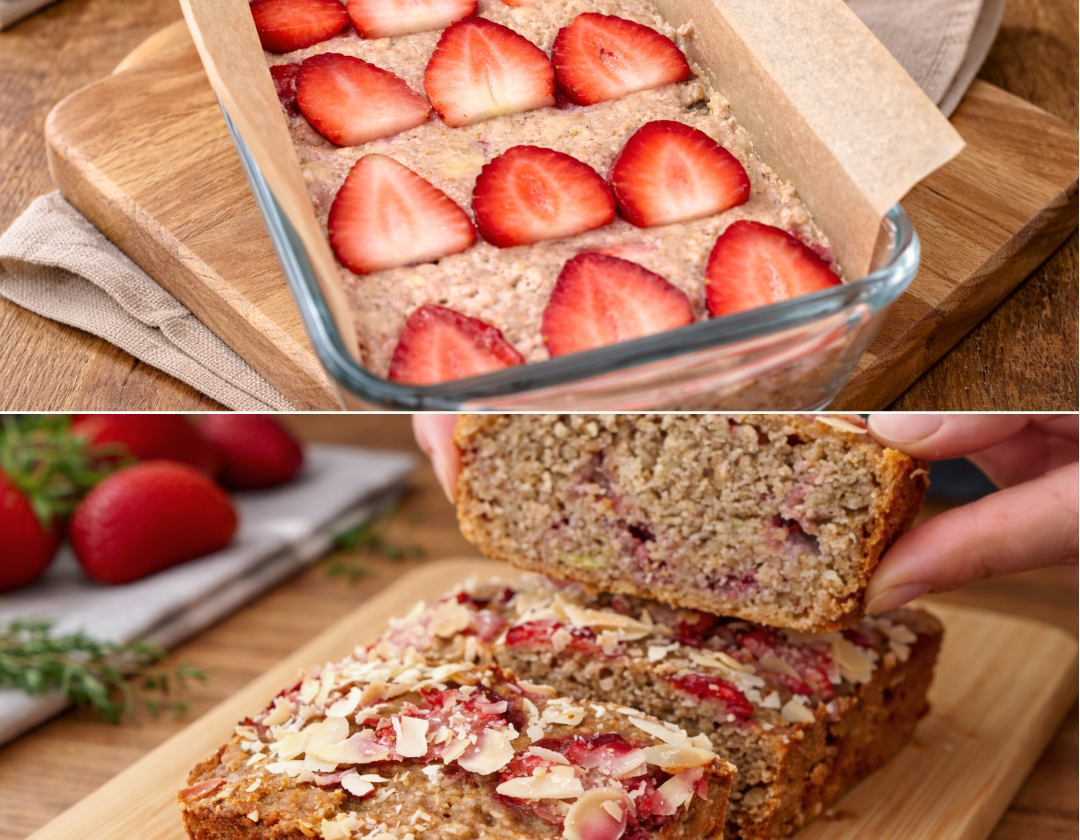
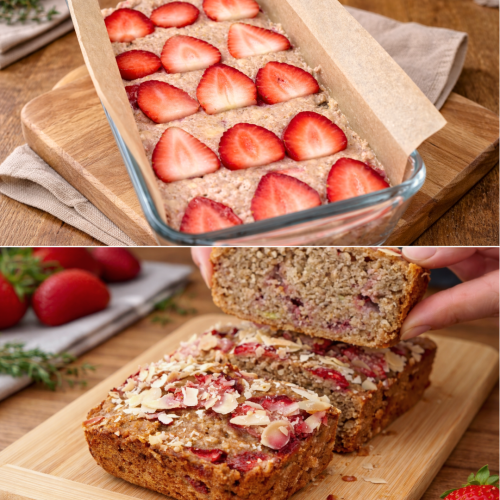
These soft and naturally sweet Strawberry Banana Oat Bites are made with ripe bananas, fresh strawberries, oat flour, coconut oil, and a touch of agave syrup. They are tender in the centre, lightly golden around the edges, and wonderfully easy to prepare—even if you have very little baking experience.
The recipe contains no wheat flour and can easily be made vegan and gluten-free. Serve the bites as a wholesome breakfast, a lunchbox snack, or a lighter homemade dessert.
Recipe Overview
- Preparation time: 20 minutes
- Resting time: 5 minutes
- Baking time: 40 minutes
- Cooling time: 30–45 minutes
- Total time: Approximately 1 hour 45 minutes
- Yield: 6 large or 8 smaller bars
- Baking temperature: 180°C, conventional oven
- Difficulty: Easy
Equipment You Will Need
- Digital kitchen scales
- Measuring jug
- Large mixing bowl
- Fork or potato masher
- High-speed blender or food processor
- Silicone spatula or wooden spoon
- Small rectangular baking dish, approximately 20 × 15 cm
- Baking parchment
- Cooling rack
A slightly different baking dish size will still work. A smaller dish will produce thicker, softer bars and may require several extra minutes in the oven. A larger dish will produce thinner bars that bake more quickly.
Important Ingredient Notes
Bananas: Choose bananas with plenty of brown spots on the skin. Very ripe bananas are softer, sweeter, and easier to mash. Firm yellow bananas will make the bars less sweet and may leave small lumps in the mixture.
Oats: Use ordinary rolled oats rather than instant oat cereal. For a certified gluten-free recipe, check that the packaging specifically states that the oats are gluten-free.
Strawberries: Fresh strawberries provide the best texture. Frozen strawberries contain more water and can make the bars too soft unless they are thawed and dried extremely well.
Coconut oil: Measure the coconut oil after melting it. Allow very hot oil to cool slightly before mixing it with the bananas.
Agave syrup: The exact amount depends on the sweetness of your bananas and strawberries. Begin with 15 ml, taste the mixture, and add more only when necessary.
Step-by-Step Instructions
Step 1: Prepare the Oven and Baking Dish
Preheat the oven to 180°C using conventional top-and-bottom heat. For a fan-assisted oven, use approximately 165–170°C.
Line a small rectangular baking dish, approximately 20 × 15 cm, with baking parchment. Leave some parchment extending above two opposite sides of the dish. These overhanging edges will act as handles, making it much easier to lift the baked mixture out later.
Lightly grease the dish before adding the parchment. The small amount of oil is not intended to prevent sticking—it helps the parchment remain flat while you spread the mixture.
Chef’s secret: Prepare the dish before mixing the ingredients. Once the oat flour is combined with the wet ingredients, it begins absorbing moisture. You want to transfer the mixture to the dish without a long delay.
Step 2: Make the Oat Flour
Place the rolled oats in a high-speed blender or food processor. Blend until they resemble a fine, slightly sandy flour.
Stop the machine once or twice and shake or stir the oats so that the larger pieces move towards the blades. The flour does not need to be as fine as commercial wheat flour, but there should not be many whole oat flakes remaining.
Transfer the oat flour to a separate bowl and set it aside.
Chef’s secret: Do not continue blending for too long after the oats become fine. Excessive blending can warm the oats and cause them to clump.
Time-saving tip: You can prepare a larger quantity of oat flour in advance. Store it in an airtight container in a cool, dry cupboard for several weeks.
Step 3: Prepare the Strawberries
Rinse the strawberries briefly under cold water. Remove the green tops and dry the berries thoroughly with kitchen paper or a clean tea towel.
Dice most of the strawberries into small pieces, approximately 1 cm in size. Reserve a few attractive strawberry slices for the top.
Dry the diced strawberries again if they release juice while you are cutting them.
Why this matters: Strawberries contain a considerable amount of water. Excess surface moisture can make the centre of the bars wet and prevent them from setting properly.
Chef’s secret: Tossing very juicy diced strawberries with one teaspoon of the prepared oat flour can help keep them evenly distributed in the batter.
Step 4: Mash the Bananas
Place the peeled bananas in a large mixing bowl. Mash them thoroughly with a fork or potato masher until the mixture is smooth and almost pourable.
Press any larger pieces against the side of the bowl. A few tiny soft pieces are acceptable, but large banana chunks can create wet pockets in the finished bars.
You should have approximately 300–350 g of mashed banana.
Beginner’s tip: If the bananas are difficult to mash, they are probably not ripe enough. Place peeled bananas in a microwave-safe bowl and warm them for 15–20 seconds to soften them slightly.
Step 5: Combine the Wet Ingredients
Add the melted coconut oil, vanilla extract, agave syrup, and optional pinch of salt to the mashed bananas.
Stir slowly but thoroughly until the coconut oil is completely incorporated and the mixture looks uniform.
The coconut oil should be liquid but not very hot. If it is too hot, it can affect the texture of the fruit. If the bananas are refrigerator-cold, the coconut oil may begin to solidify when added. In that case, place the bowl over warm water for a few seconds and continue stirring.
Chef’s secret: Salt is optional, but even a tiny pinch improves the flavour of the bananas, strawberries, and vanilla. It should not make the bars taste salty.
Step 6: Add the Oat Flour
Add the oat flour to the wet mixture in two or three additions. Stir gently after each addition, scraping the bottom and sides of the bowl.
Continue mixing only until there are no visible dry patches. The mixture should be thick, soft, and easy to spread. It will be much thicker than pancake batter but softer than traditional biscuit dough.
Allow the mixture to rest for 5 minutes.
During this time, the oat flour will absorb some of the banana moisture and the mixture will become slightly thicker.
Chef’s secret: Do not immediately add more oat flour if the mixture appears soft. Give the oats time to hydrate first. Adding too much flour can make the finished bars dry and heavy.
Step 7: Fold in the Strawberries
Add the diced strawberries to the rested mixture.
Using a silicone spatula, fold them in gently. Scoop from the bottom of the bowl and turn the mixture over the fruit instead of stirring vigorously.
Stop as soon as the strawberries are evenly distributed.
Why gentle folding matters: Aggressive mixing crushes the strawberries, releases more juice, and may turn the entire mixture watery.
Step 8: Fill the Baking Dish
Transfer the mixture to the prepared baking dish. Use a spatula to spread it into all four corners.
Level the surface carefully, making sure the layer has a consistent thickness. Uneven areas may bake at different speeds.
Tap the dish lightly on the worktop once or twice to remove large air pockets.
Chef’s secret: Slightly dampen the spatula with water or coat it with a very thin layer of coconut oil. This prevents the sticky mixture from pulling away from the surface as you level it.
Step 9: Add the Toppings
Arrange the reserved strawberry slices over the surface. Sprinkle with slivered almonds, when using.
Press the toppings very gently into the mixture. They should remain visible but should not sit completely loose on top.
Do not cover the entire surface with strawberries. Too much fruit on top can release excess moisture and make the centre take longer to bake.
Nut-free option: Leave out the almonds or replace them with a small spoonful of rolled oats.
Step 10: Bake
Place the dish on the middle shelf of the preheated oven and bake for approximately 40 minutes.
Begin checking after 35 minutes, particularly when using a larger or dark-coloured baking dish.
The bites are ready when:
- The edges are lightly golden.
- The surface no longer looks wet.
- The centre feels set and springs back slightly when touched.
- A wooden skewer inserted into an area without a strawberry comes out with a few moist crumbs but no raw mixture.
Do not expect the skewer to come out completely dry. These bars are made with fruit and are intended to remain moist.
When the top is browning too quickly but the centre still feels soft, cover the dish loosely with aluminium foil and continue baking for another 5–10 minutes.
Chef’s secret: Avoid repeatedly opening the oven during the first 30 minutes. A sudden loss of heat can slow the baking process and contribute to a soft centre.
Step 11: Cool Completely
Remove the dish from the oven and place it on a cooling rack.
Allow the bars to cool in the dish for at least 20 minutes. Then use the parchment handles to lift the entire bake onto the rack.
Leave it to cool completely for another 20–30 minutes before slicing.
This stage is essential. The bars continue to firm as the oats cool and absorb the remaining moisture.
Chef’s secret: Cutting the bars while warm is the most common reason they crumble. For especially neat slices, refrigerate the cooled bake for 20–30 minutes before cutting.
Step 12: Slice and Serve
Use a sharp knife to cut the bake into 6 large bars or 8 smaller bites.
Clean the knife between cuts for smoother edges.
Serve at room temperature or slightly chilled. The bars are delicious on their own, but they can also be served with plain yoghurt, coconut yoghurt, fresh fruit, or a small spoonful of nut butter.
Storage Instructions
Refrigerator
Store the cooled Strawberry Banana Oat Bites in an airtight container in the refrigerator for up to 4 days.
Place parchment between layers to prevent sticking.
Freezer
Freeze individual bars in a single layer until firm, then transfer them to a freezer-safe container or bag. Store for up to 2 months.
Defrost overnight in the refrigerator or leave at room temperature for approximately 1 hour.
Serving After Refrigeration
The coconut oil becomes firmer when chilled, so refrigerated bars may have a denser texture. Allow them to stand at room temperature for 10–15 minutes before serving for a softer bite.
Nutrition
The following values are approximate and are calculated for 1 of 8 bars, using 20 ml agave syrup and 25 g slivered almonds:
- Calories: approximately 255 kcal
- Carbohydrates: approximately 31 g
- Protein: approximately 4 g
- Fat: approximately 14 g
- Saturated fat: approximately 10 g
- Fibre: approximately 4 g
- Sugars: approximately 11 g
- Sodium: approximately 5 mg
Nutritional values will vary depending on the size and ripeness of the bananas, the quantity of agave syrup, the toppings used, and the number of portions.
Chef’s Best Tips
- Use heavily spotted bananas. They provide both sweetness and moisture, which are essential because this recipe contains no eggs or refined sugar.
- Weigh the bananas after peeling. Three bananas can vary greatly in size. A total of 300–350 g gives the most reliable texture.
- Dry the strawberries carefully. Even a small amount of extra water can make fruit-based oat bars difficult to set.
- Blend the oats finely. Coarsely ground oats create a more rustic and crumbly bar. Fine oat flour produces a softer, more cohesive texture.
- Let the mixture rest. The five-minute hydration period allows the oat flour to thicken naturally.
- Do not overmix after adding the strawberries. Gentle folding protects the fruit and prevents excess juice from being released.
- Use visual signs rather than relying only on time. Ovens and baking dishes vary. Look for golden edges and a set centre.
- Cool before slicing. The bars may appear delicate immediately after baking but become significantly firmer as they cool.
- Adjust the sweetness before adding the strawberries. Taste the banana mixture first. Very ripe bananas may require little or no agave.
- For cleaner portions, chill before cutting. A short refrigeration period gives you bakery-style edges.
FAQ
Can I use store-bought oat flour?
Yes. Use 160 g of oat flour. Store-bought oat flour is often more finely ground than homemade flour, so the finished bars may be slightly smoother and denser.
Can I use frozen strawberries?
Yes, but fresh strawberries are preferable. Thaw frozen strawberries completely, drain away all liquid, pat them very dry, and cut them into small pieces. The bars may still require an additional 5–10 minutes of baking.
Can I replace the coconut oil?
You can replace it with the same volume of mild vegetable oil. The texture may be slightly softer because coconut oil firms as it cools.
For a richer flavour, melted butter may also be used when the recipe does not need to be vegan.
Can I omit the agave syrup?
Yes. When the bananas are extremely ripe, the bars may be sweet enough without it. Omitting the syrup will make them taste more like a breakfast bar than a dessert.
What can I use instead of agave syrup?
Use maple syrup in the same quantity. Honey also works when the recipe does not need to be vegan.
Why are my bars too wet?
The most common causes are:
- Strawberries that were not dried properly
- Using more than 350 g of banana
- Underbaking
- Cutting before the bars cooled
- Using a very small dish that created an unusually thick layer
Return underbaked bars to the oven and bake for another 5–10 minutes, covering the top loosely when necessary.
Why did my bars crumble?
They may have been sliced while still warm, or the oats may have been ground too coarsely. Make sure the bars cool completely and use finely blended oat flour.
Can I make the recipe nut-free?
Yes. Omit the slivered almonds. Decorate the top with extra rolled oats, pumpkin seeds, or only strawberry slices.
Is this recipe gluten-free?
Oats do not contain gluten naturally, but they can be contaminated during production. Use oats labelled certified gluten-free when preparing the recipe for someone who must avoid gluten.
Can I add chocolate?
Yes. Fold in 40–60 g of dark chocolate chips with the strawberries. Keep in mind that this will increase the sweetness and calorie content.
Can I make smaller portions?
Yes. Cut the cooled bake into 12 small squares. These smaller portions are ideal for children’s lunchboxes or snack platters.
How do I know when the centre is fully baked?
The centre should feel firm rather than liquid or wobbly. A skewer inserted away from the fruit should show moist crumbs, but it should not be coated with raw batter.
Can I prepare the mixture in advance?
It is better to bake the mixture shortly after combining it. Oat flour continues absorbing moisture, so a mixture left overnight may become overly thick and bake unevenly.
Strawberry Banana Oat Bites
Instructions
- Preheat the oven to 180°C conventional or 165–170°C fan-assisted. Line a 20 × 15 cm baking dish with parchment.
- Blend the rolled oats until they form a fine oat flour.
- Wash and thoroughly dry the strawberries. Dice most of them and reserve a few slices for topping.
- Mash the bananas in a large bowl until smooth.
- Stir in the melted coconut oil, vanilla, agave syrup, and salt.
- Add the oat flour and mix until no dry patches remain.
- Let the mixture rest for 5 minutes so the oats can absorb the moisture.
- Gently fold in the diced strawberries.
- Transfer the mixture to the prepared dish and spread it into an even layer.
- Top with the reserved strawberry slices and slivered almonds. Press them lightly into the surface.
- Bake for approximately 40 minutes, until the edges are golden and the centre is set.
- Cool in the dish for 20 minutes, then lift out using the parchment and cool completely before slicing into 8 bars.
Notes
- Use bananas with plenty of brown spots for the best sweetness and texture.
- Dry the strawberries carefully to prevent an overly wet centre.
- Do not add extra oat flour before allowing the mixture to rest for 5 minutes.
- Avoid overmixing after adding the strawberries.
- The bars firm considerably as they cool, so do not slice them while warm.
- Store in an airtight container in the refrigerator for up to 4 days.
- Freeze individual bars for up to 2 months.