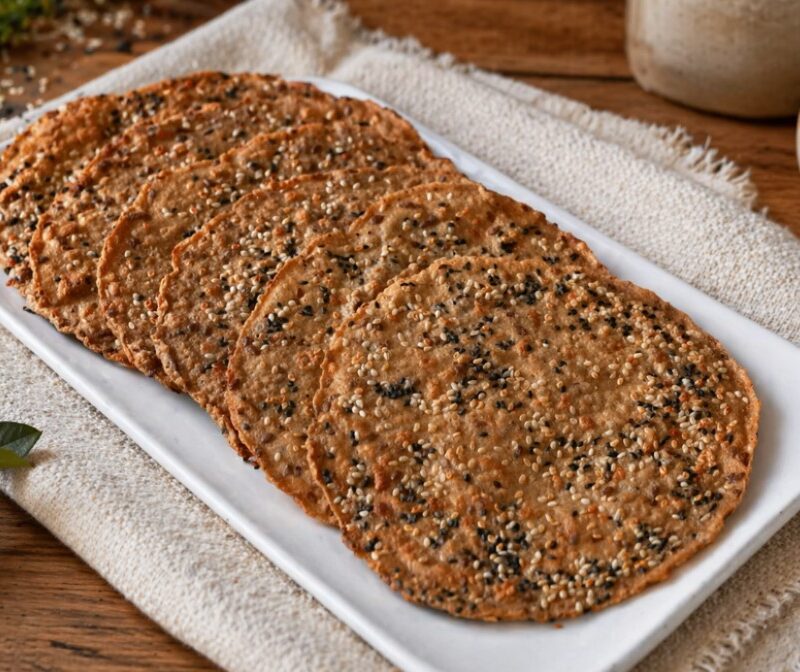
Soft, flexible, flourless flatbread made with oats, chia, and flax
If you have never made bread before, start here. This oat flatbread is one of the simplest and most forgiving recipes I know. There is no flour, no yeast, no kneading, and no complicated shaping. You soak, blend, mix, and cook. That is all.
What makes this recipe special is the texture. When prepared properly, the flatbreads turn out soft, flexible, and pleasantly hearty, with a mild savory flavor that works beautifully for wraps, breakfast, lunch, or a simple side. The oats create the body, while chia and flax act as natural binders, giving the bread structure without eggs or flour.
This is the kind of recipe I recommend to beginners because it teaches you how batter consistency, heat control, and patience affect the final result. Once you make it once or twice, you will be able to adjust it confidently and make it your own.
🌾 Enjoy A Soft Oat Flatbread That Turns Three Simple Ingredients Into Everyday Magic
Why You’ll Love This Recipe
- No flour, no yeast, no kneading
- Naturally rich in fiber
- Easy to make with simple pantry ingredients
- Great for wraps, dips, sandwiches, or meal prep
- Beginner-friendly and very adaptable
Equipment
- Large bowl
- 2 small bowls
- Blender
- Non-stick skillet or frying pan
- Ladle or measuring cup
- Spatula
🔥 Choose A Flatbread That Cooks In Minutes And Feels Light, Warm And Comforting
Detailed Step-by-Step Recipe
Step 1: Soak the Oats Properly
Place the rolled oats in a large bowl and pour over the 3 1/2 cups of water. Stir once so all the oats are evenly wet. Let them soak for at least 20 to 30 minutes, but ideally closer to 45 to 60 minutes if you have the time.
What you are looking for
The oats should become fully softened and swollen. They should no longer feel dry or firm in the center.
Why this step matters
This is what replaces kneading and flour development. Soft oats blend into a smooth batter much more easily, which gives you a better texture in the final flatbread.
Chef’s secret
Do not rush this step. If the oats are under-soaked, the batter will be grainy instead of smooth, and the flatbread may crack more easily during cooking.
Step 2: Make the Chia and Flax Gels
In one small bowl, combine the chia seeds with 1/3 cup water. In another small bowl, combine the flax seeds with the remaining 1/3 cup water. Stir both mixtures well and leave them for 10 to 15 minutes.
What you are looking for
Both mixtures should become thick, glossy, and gel-like.
Why this step matters
Chia and flax act like natural binders. They help hold the flatbread together, improve flexibility, and reduce the risk of tearing when you flip it.
Chef’s secret
Stir the chia and flax once, then stir again after 2 or 3 minutes. This prevents clumping and helps them gel evenly.
🥣 Savour The Wholesome Goodness Of Oats In A Soft, Flexible Flatbread
Step 3: Drain Only if Necessary
After the oats are fully softened, check the bowl. If there is a lot of excess water sitting on top, drain only the extra liquid. Do not squeeze the oats dry.
What you are looking for
The oats should be soft and moist, not watery and not dry.
Why this step matters
Too much water makes the batter weak and difficult to cook. Too little water makes it thick and hard to spread in the pan.
Chef’s secret
Keep a little of the soaking water nearby. If the blender struggles, you can add a small splash back in.
Step 4: Blend Until Completely Smooth
Transfer the soaked oats to a blender. Add the salt, thyme, paprika, cumin, onion powder, garlic powder, and black pepper. Blend until the mixture is very smooth.
What you are looking for
The batter should look silky and uniform, with no obvious oat flakes left.
Why this step matters
A smooth batter gives you a flatbread that feels tender and even, rather than rough or crumbly.
Chef’s secret
Blend longer than you think you need. Most beginners stop too early. An extra 30 to 60 seconds can make a big difference.
🌿 Bring Clean, Healthy Simplicity To Your Table With A Bread You Can Make Anytime
Step 5: Adjust the Batter Consistency
Check the batter before adding the chia and flax gels. It should be pourable, similar to a pancake batter, but slightly thicker.
If it looks too thick, add a little water, 1 tablespoon at a time, and blend briefly after each addition.
What you are looking for
The batter should pour from a spoon or ladle without dropping in a stiff lump.
Why this step matters
This is one of the most important steps in the recipe. If the batter is too thick, your flatbread will be dense and difficult to spread. If it is too thin, it may tear or become gummy.
Chef’s secret
When in doubt, make one test flatbread first. That first one tells you whether the batter needs a splash more water or a slightly longer cooking time.
Step 6: Fold in the Chia and Flax Mixtures
Pour the soaked chia and flax mixtures into the blended oat batter. Stir thoroughly until fully combined.
Why this step matters
You want the gel evenly distributed through the batter so every flatbread cooks with the same texture and structure.
Chef’s secret
Do not blend the chia and flax after gelling unless you want a smoother texture. Stirring them in by hand keeps the batter well structured and easier to manage.
🍞 Enjoy A Flatbread That Is Naturally Filling, Gently Flavoured And Perfect For Any Topping
Step 7: Heat the Pan Correctly
Place a non-stick skillet over medium heat. Let it heat for a minute or two before adding a few drops of olive oil. Spread the oil lightly with a brush or paper towel.
What you are looking for
The pan should be hot enough that the batter begins to set shortly after hitting the surface, but not so hot that the bottom burns before the top firms up.
Why this step matters
Temperature control is everything here. Medium heat gives the flatbread time to cook through before browning too fast.
Chef’s secret
Never start with a cold pan. A properly preheated pan helps the batter set evenly and makes flipping much easier.
Step 8: Pour and Spread the Batter
Pour a portion of batter into the center of the pan. Immediately tilt and rotate the pan to spread it out like a thin pancake. You can also use the back of a spoon to gently guide it into shape if needed.
Thickness guide
- Thin: best for wraps and roll-ups
- Medium: best for everyday flatbread
- Thicker: softer, more bread-like texture
Chef’s secret
For beginners, start with medium thickness. Very thin flatbreads are flexible and delicious, but they need a bit more confidence when flipping.
✨ Let Each Bite Remind You How Satisfying Minimal‑Ingredient Cooking Can Be
Step 9: Cook Slowly Until Set
Cook the first side until the edges look dry and the surface no longer appears wet. The bottom should be lightly golden.
This usually takes 2 to 4 minutes, depending on the thickness and your pan.
What you are looking for
The flatbread should release more easily from the pan once the first side is properly cooked.
Why this step matters
Trying to flip too early is the most common mistake.
Chef’s secret
Watch the surface, not the clock. A set surface is a better signal than an exact number of minutes.
Step 10: Flip Carefully and Finish Cooking
Slide a spatula underneath and flip the flatbread gently. Cook the second side until golden. If needed, flip once or twice more on slightly lower heat to make sure the center is fully cooked.
Why this step matters
Because this is a moist oat-based batter, an extra flip or two can improve the final texture and prevent a gummy center.
Chef’s secret
If the outside browns too quickly but the center still feels soft, lower the heat and cook a bit longer. Good flatbread is cooked through, not rushed.
🌾 Keep This Recipe In Your Routine For Quick, Healthy Meals That Always Work
Step 11: Cool Briefly Before Stacking
Transfer the cooked flatbread to a plate or cooling rack. Let it cool for 1 to 2 minutes before stacking with the others.
Why this step matters
A short rest allows steam to settle and helps the flatbread finish setting without becoming wet.
Chef’s secret
Cover the stack loosely with a clean kitchen towel to keep the flatbreads soft and pliable.
How to Serve
These flatbreads are very versatile. Serve them:
- As wraps with vegetables, grilled chicken, or hummus
- Alongside soups and stews
- With avocado and eggs for breakfast
- As a base for savory spreads
- With cheese, roasted vegetables, or beans for a quick lunch
Storage and Meal Prep
Store the flatbreads in an airtight container in the refrigerator for up to 4 days. Place parchment paper between them if stacking.
To reheat, warm them in a dry skillet for 20 to 30 seconds per side, or microwave briefly until soft.
For longer storage, freeze them with parchment between each flatbread. Thaw and reheat as needed.
🔥 Make A Flatbread That Is Soft Enough To Fold And Strong Enough To Hold Your Favourite Fillings
Nutrition
Estimated per serving
(Based on 6 flatbreads; values are approximate and depend on exact ingredients and size)
- Calories: 110
- Protein: 4 g
- Carbohydrates: 16 g
- Fiber: 4 g
- Fat: 4 g
- Sodium: 390 mg
Chef’s Best Tips
- Soak the oats fully
This is the foundation of the recipe. Soft oats create a smoother, better batter. - Blend until silky
A grainy batter gives a rougher texture. Take the extra time to blend properly. - Control the heat
Medium heat is your friend. Too high, and the outside browns before the center cooks. - Do one test flatbread first
Professional kitchens do this all the time. It helps you adjust the batter before cooking the whole batch. - Do not make the batter too thick
Thick batter creates dense flatbreads. You want it pourable, not stiff. - Wait before flipping
If it sticks or tears, it is probably not ready yet. - Use a good non-stick pan
This recipe is much easier with the right pan, especially for beginners. - Keep them covered after cooking
A towel over the stack helps them stay soft and flexible.
🥣 Celebrate The Pure, Honest Flavour Of Oats In A Warm, Homemade Flatbread
FAQ
Can I use quick oats instead of rolled oats?
Yes, but the texture may be slightly softer and less hearty. Rolled oats usually give the best structure.
Can I skip the chia or flax?
I do not recommend skipping both. They help bind the batter and improve flexibility. If you omit one, keep the other.
Can I make the batter ahead of time?
Yes. You can prepare the batter and keep it in the refrigerator for up to 24 hours. Stir well before using.
Why is my flatbread breaking?
Usually one of three reasons: the batter is too thick, the oats were not blended enough, or you tried to flip too early.
🌿 Enjoy A Bread Alternative That Fits Beautifully Into A Balanced Lifestyle
Why is it gummy inside?
The flatbread is likely too thick or cooked on heat that was too high. Lower the heat and cook a little longer.
Can I make these without oil?
Yes, if you have a very good non-stick pan. A tiny amount of oil, however, helps with color and release.
Are these good for wraps?
Yes, especially when made thinner. Let them cool slightly before filling so they become more flexible.
Can I add other flavors?
Absolutely. Chili flakes, Italian herbs, sesame seeds, smoked paprika, or fresh chopped herbs all work well.
🌾 Bring A Touch Of Rustic Warmth To Your Kitchen With This Simple Oat Creation
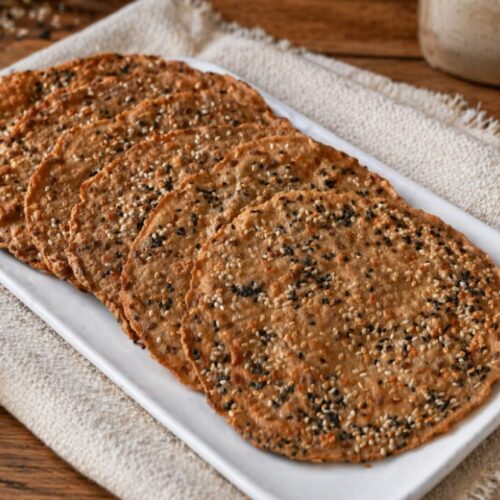
Healthy 3-Ingredient Oat Flatbread
Instructions
- Soak the oats in 3 1/2 cups water for 30 to 60 minutes until soft.
- In separate bowls, soak chia seeds in 1/3 cup water and flax seeds in 1/3 cup water until gel-like.
- Drain excess water from oats if needed and add oats to a blender.
- Add salt, thyme, paprika, cumin, onion powder, garlic powder, and black pepper. Blend until smooth.
- Adjust with a little water if needed until the batter is pourable.
- Stir in the chia and flax mixtures.
- Heat a non-stick pan over medium heat and lightly grease with olive oil.
- Pour batter into the pan and spread into a thin flatbread.
- Cook until golden and set, then flip and cook the other side.
- Repeat with remaining batter and keep flatbreads covered to stay soft.
Notes
- Make them thin for wraps or thicker for a softer bread texture.
- Blend the oats very well for the smoothest result.
- Cook on medium heat for best texture.
- Store in the fridge for up to 4 days.