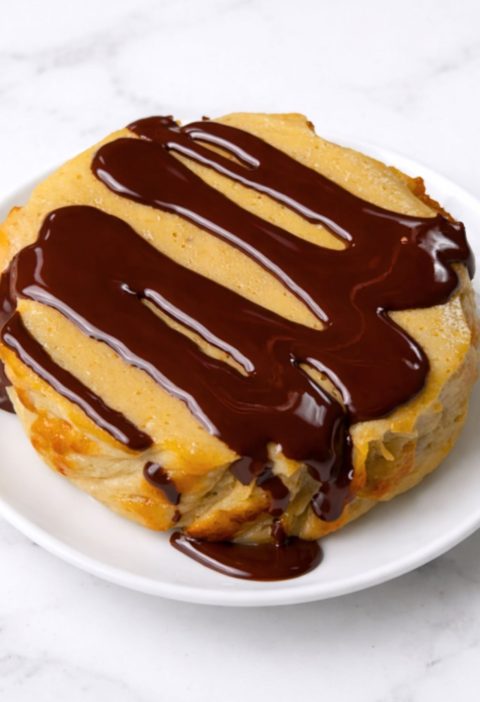
This is the kind of recipe I love teaching beginners: you throw everything into a blender, bake for a short time, and you get a soft, high-protein cake with a “chocolate-banana” vibe. I’ll walk you through every stage, explain what to look for, and share the little details that make it come out perfect.
Equipment
- Blender or food processor (immersion blender also works)
- Small baking dish or loaf pan (line it for easy removal)
- Spatula
- Oven
Step 1: Preheat and prepare the pan
- Preheat your oven to 180°C (356°F).
Give the oven time to fully heat—this cake bakes fast, so starting at the right temperature matters. - Prepare your baking dish.
- Line with baking paper, or grease lightly with a neutral oil.
- If using parchment, leave “handles” (paper sticking up) so you can lift the cake out.
Pro tip: If your dish is glass or thick ceramic, it heats slower. The cake may need 2–4 extra minutes compared to a metal pan.
Step 2: Choose the right bananas (this affects everything)
- Use very ripe bananas: brown spots = maximum sweetness and aroma.
- If your bananas are only yellow and firm, the cake will taste more “eggy” and less sweet.
Quick fix: If bananas aren’t ripe, slice them and microwave for 20–30 seconds to soften and boost sweetness a bit.
Step 3: Blend the batter (the “smoothness” secret)
- Add to the blender:
- 2 eggs
- 2 bananas
- 200 g Greek yogurt
- soft curd cheese
- vanilla extract
- cocoa powder
- agave syrup (start with a small drizzle)
- Blend until completely smooth—stop and scrape down the sides once or twice.
You want a batter with no banana lumps and no curd cheese grains.
Chef’s secret: Blend a full 30–60 seconds longer than you think you need. That extra time is what gives a clean, creamy crumb instead of a slightly grainy texture.
Sweetness control (beginner-friendly):
After blending, dip a spoon in and taste. Add more agave little by little and blend again. Bananas vary a lot in sweetness.
Step 4: Rest the batter for better texture (tiny step, big payoff)
Let the batter sit for 3–5 minutes before baking.
Why? The mixture thickens slightly and bakes more evenly. Beginners often skip this and wonder why the center is softer than the edges.
Step 5: Bake (and don’t overbake!)
- Pour the batter into the prepared dish.
- Tap the dish gently on the counter 2–3 times to pop air bubbles.
- Bake at 180°C for 15 minutes.
How to know it’s done (better than just time)
- The top should look set, not wet.
- The center should jiggle slightly (like a cheesecake), not wobble like liquid.
- A toothpick may come out slightly moist—that’s okay. Overbaking dries it out.
Common beginner mistake: baking until the toothpick is totally dry. With this style of cake, that usually means it’s already dry.
If your cake is thicker/deeper: bake 2–6 minutes longer. Always judge by look + gentle jiggle.
Step 6: Cool correctly (this prevents collapse)
- Remove from the oven and let it cool in the pan for 10–15 minutes.
- Then lift it out (parchment handles help) and let it cool further until just warm.
Chef’s hack: Cooling sets the proteins. If you cut it piping hot, it may seem “too soft” and break. Give it time to firm up.
Step 7: Top it like a pro (smooth, clean finish)
- Spread a layer of Greek yogurt over the top.
- For a thicker, more “frosting-like” result, use very thick Greek yogurt (or strain it in a sieve for 10 minutes).
- Dust with cocoa powder.
Use a small sieve if you have one—fine cocoa looks professional and tastes smoother.
Flavor upgrade: Add a few drops of vanilla to the yogurt topping, or a tiny drizzle of agave for a dessert-style finish.
Ingredients (1 small cake, about 4–6 slices)
- 2 large eggs
- 2 ripe bananas (the riper and more spotty, the sweeter)
- Greek yogurt — 200 g (plus a little extra for topping if you want it thicker)
- Agave syrup (to taste)
- Soft curd cheese (0.1% fat) (use a creamy, smooth one; amount as in your original mix)
- Cocoa powder — 1 tsp (plus more for dusting)
- Vanilla extract — 1 tsp
- Optional pinch of salt (tiny detail, big improvement for flavor)
Chef’s note for beginners: This cake is naturally moist and tender. It won’t behave like a fluffy sponge cake with flour—it’s more like a baked protein cheesecake-meets-banana bread texture. That’s exactly what we want.
Serving and storage
- Best texture after 30 minutes of cooling (even better chilled).
- Store covered in the fridge for up to 2–3 days.
- This cake is fantastic cold—firmer, creamier, and more “sliceable.”
Chef’s final tip: If you want neat slices, chill it for 1 hour and cut with a knife dipped in hot water, then wiped dry.